In this month’s “In Depth” section, we talk about the European project Art4Sea, which now comes to an end after three years of interdisciplinary collaboration, turning three Mediterranean islands into laboratories of artistic, scientific, and technological creation.
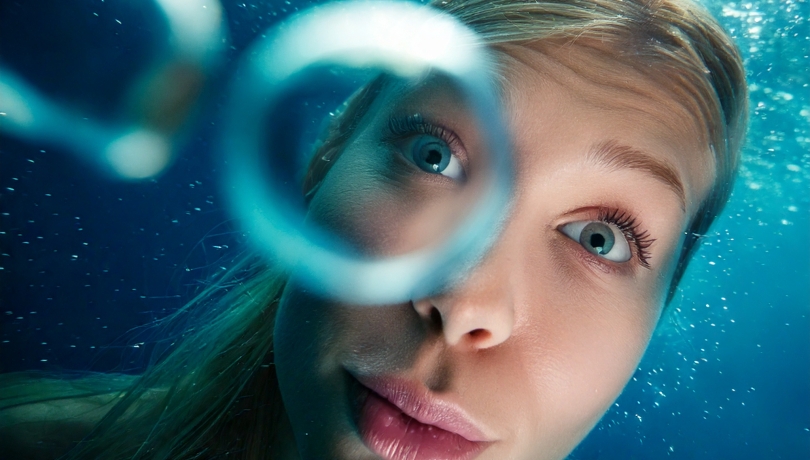
The Mediterranean Sea is not just a body of water; it is a container of memory, biodiversity, and, at present, vulnerability. Under this premise, Art4Sea was born—a three-year project funded by the Creative Europe programme and integrated into UNESCO’s Ocean Decade. The objective has been clear from the outset: to use art as a bridge to strengthen public understanding of the ocean and to encourage behavioural changes towards sustainability.
The Institut de Ciències del Mar (ICM-CSIC) has played a fundamental role in this journey, acting as the “scientific backbone” of the project. Through a training programme and in-person mentoring sessions carried out during the artistic residencies on the islands, the scientific team guided 24 artists from around the world in translating environmental data and issues into artworks with a scientific foundation.
Science as a creative driver
Within this mechanism, the figure of Macarena Marambio, researcher at the ICM-CSIC and a key element in the scientific coordination, highlights the importance of opening laboratory doors to other disciplines. During the presentation of the project’s results at the ICM Assembly Hall, Marambio emphasised that science needs new languages to reach the general public:
“Our role has been to provide artists with the tools and knowledge to understand what is really happening beneath the surface. We did not want them to make only ‘beautiful’ things, but for each work to be a vehicle for ocean literacy. Seeing how they transform complex concepts about the state of ecosystems into pieces that move people is, for us, a new way of doing research and knowledge transfer.”
However, the collaboration was not limited to the delivery of data; it also included intensive mentoring sessions in which scientists from the ICM and members of the centre’s Science and Art group debated with the creators about the resilience of the marine environment, biodiversity loss, and the impact of human activity.
Residencies in Alonissos, Gozo, and Ustica
The heart of the project was developed on three small Mediterranean islands: Alonissos (Greece), Gozo (Malta), and Ustica (Italy). There, the artists selected from more than 250 applications lived alongside the local community and the marine environment. Emilia Brandi (3D Research), coordinator of Art4Sea, describes the project as “a shared journey that has brought together diverse forms of knowledge around the common horizon of water.”
In Alonissos, for example, the interaction evolved from initial curiosity to a deep connection with the community. Vicky Drouga (Atlantis Consulting) recalls the emotion of seeing how residents recognised their own culture in the artworks:
“When citizens saw the documentary and the artistic pieces, they understood that the artists had come to value their traditions and their environment.”
Art as a mirror and virtual laboratory
The creative process resulted in 12 digital works and 12 physical works, including murals and underwater sculptures, many of them created according to eco-conscious criteria. The artist Michal Trpák, author of the “Chapel of Gaia,” highlights that “bringing artists and researchers together helps capture people’s attention and makes them reflect on how we behave towards the environment.”
One of the most innovative legacies is the immersive virtual exhibition developed by 3D Research, with the participation of Fabio Bruno and Gloria Morabito. This exhibition—available for Meta Quest, as well as on the project’s website and YouTube channel—allows all the works to be explored together. The user moves through a virtual space filled with bubbles floating along simulated marine currents, each containing a work and its scientific context.
Closing in Barcelona and project legacy
On 15 and 16 January 2026, the Art4Sea team gathered in Barcelona to hold the final consortium meeting and the public closing event at the ICM-CSIC, officially marking the end of the project. The meeting highlighted both the results achieved and the spirit of interdisciplinary collaboration that has defined Art4Sea since its beginning.
The public event included two complementary sessions: a morning session aimed at the scientific and academic community of the ICM, and an afternoon session open to the general public, art students, curators, and representatives of the cultural sector. Presentations, round tables, and digital screenings showcased the diversity of voices and perspectives that have shaped the project, with the participation of artists, scientists, and cultural agents.
The project thus reaches its official end this January, but as the ICM team reminds us, although the project concludes, its legacy continues. The works installed in Ustica, Alonissos, and Gozo, as well as the digital and immersive content, will remain as cultural and educational resources. In addition, a Final Catalogue—bringing together all the artistic, technological, and scientific works and contributions—and a documentary narrating Art4Sea’s journey across the three islands are currently in production.
Overall, Art4Sea demonstrates that when art and science come together, the message to society travels much further and leaves a lasting imprint on the way we understand and care for the ocean.
Have a look at the presentation here.