ICM conducts excellent research to understand the ocean-related challenges and their societal impacts. These are questions demaning contributions from different scientific disciplines.
As the most interdisciplinar research center in Spain addressing ocean science and with the objective of maximise the full potential of our research, our scientific strategy focuses on four research hubs to deliver the ocean science we need for a healthy planet.
Climate, life and hazards
Our Research HUBS
Biodiversity discovery and conservation
To advance on the discovery, study, protection and sustainable use of marine biodiversity.
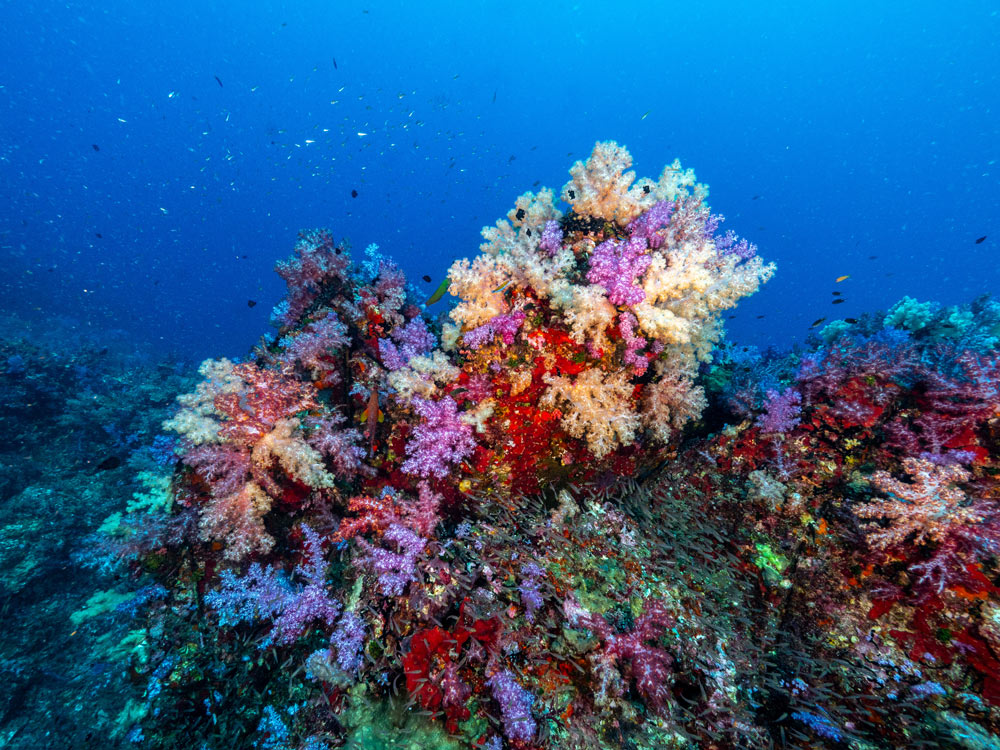
The loss of biodiversity is one of the main effects of global change, threatening the Earth system as a whole. Humanity has already crossed the planetary boundary related to genetic and functional biodiversity, prompting the UN to identify the protection and restoration of ecosystems and biodiversity as a major global challenge. Addressing this requires a deep understanding of the existing diversity pools (many of which remain poorly characterized) as well as how natural gradients and multiple stressors such as climate change, human impacts, and resource flows shape marine organism communities and their functions. It also calls for the development of innovative solutions to monitor, protect, manage, and restore biodiversity under dynamic environmental and social conditions. Building marine science for a resilient future demands an integrated approach that embraces the multiple dimensions of biodiversity (e.g., genetic, functional, phylogenetic, taxonomic, and ecosystem-level diversity), and that incorporates both biological and non-biological components of ecosystems.
RESEARCH PRIORITIES:
Biodiversity patterns and interactions across scales, taxa and ecosystems.
Hidden mechanisms of ecosystem resilience: role of microbiomes, adaptive behaviours and molecular responses to changing conditions.
Looking back for understanding present and future biodiversity patterns in the ocean.

Climate change
To study the ocean as a climate regulator and receptor of climate change.
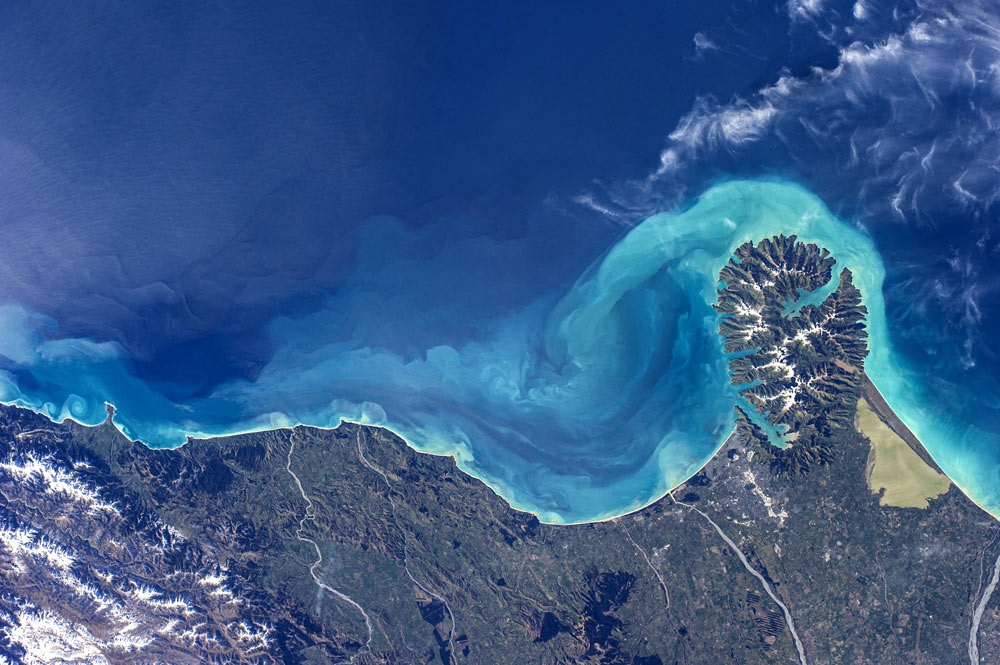
Anthropogenic greenhouse gas emissions drive global warming, with the ocean mitigating these effects by absorbing 25% of CO2 emissions and 90% of excess heat. Despite its buffering capacity, uncertainties persist regarding the processes governing this regulation. Climate change alters heat transport and ocean circulation, causing episodes of extreme meteorological conditions as well as progressively impacting species' physiology, behaviour, ecology and distribution, with severe socioeconomic consequences. Knowledge of the intertwining of heat and matter transport, air-sea gas exchanges, and biogeochemical cycles is essential for predicting changes in ecosystem structure, productivity, and services. In turn, climate-induced alterations in oceanic physics, chemistry, and biology exert feedbacks on climate through changes in greenhouse gas fluxes, aerosol and cloud formation, and carbon storage. Accurately predicting these changes is hindered by insufficient data and understanding, and requires interdisciplinary collaboration and integration of observational and modelling efforts across spatial and temporal scales, including paleorecord analysis. This comprehensive and collaborative approach is vital to inform effective strategies towards societal adaptation to climate change and mitigation of its adverse impacts.
RESEARCH PRIORITIES:
Linking pelagic ecosystem variability to climate-driven physical and biogeochemical processes in the coastal NW Mediterranean Sea over the last 25 years.
Indicators of the variability/stability of the Atlantic Meridional Overturning Circulation and the Southern Ocean Convection.
Air-sea exchanges of gases and aerosols: improved regional estimates from high-resolution satellite observations.
Seafood sustainability
To work towards a safe, fair, healthy, and sustainable seafood production for a growing human population.
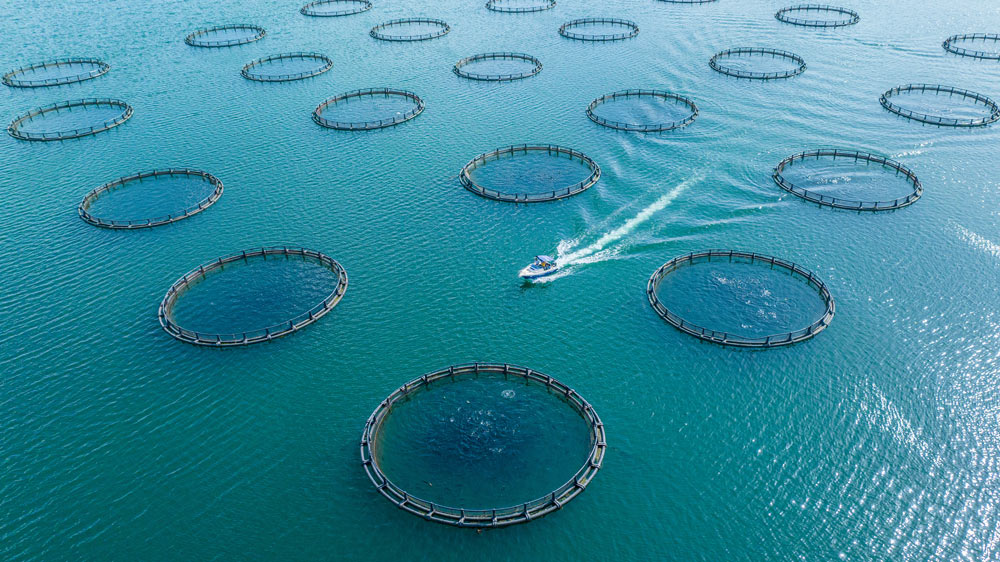
A looming food crisis threatens seafood availability, necessitating immediate action to ensure safe, fair, and sustainable food sources from fisheries and aquaculture. Global calls for transitioning to sustainable fisheries emphasise responsible fishing practices, reducing bycatch, and utilising fish waste, while extending spatial management measures to protect species and habitats. Sustainable aquaculture expansion offers a solution amid increasing pressure on fish stocks, requiring critical investments in research and technology, including genomic techniques for resilient seafood cultivation. Adopting responsible aquaculture methodologies is essential to minimise environmental impact and resource usage. Addressing broader issues such as pollution, habitat degradation, and climate change impacts is paramount, alongside enhancing consumer awareness and preserving fishers’ livelihoods. Achieving fairness in the seafood industry requires interventions in labour rights, transparency, and equitable access to resources. Supporting small-scale fisheries, fair trade, and policy frameworks are crucial steps toward an ethical seafood value chain. Sustaining seafood resources entails comprehensive actions integrating ecosystem-based management, innovative aquaculture, and climate strategies, alongside responsible fishing and trade practices. It is vital to understand the trade-offs between the benefits, risks, and sustainability of seafood consumption amid global change, highlighting the need for interdisciplinary approaches that bridge fisheries biology, ecology, and the social sciences.
RESEARCH PRIORITIES:
Seafood Safety and Quality: Balancing the nutritional benefits (Omega-3s) with the risks (contaminants) for human health.
Resource Resilience: Modelling how marine species adapt to climate change (plasticity) and enhancing data accuracy for better fisheries management (stock assessment) and sustainable aquaculture.
Production: Comparing the trade-offs and complementaries between aquaculture and wild fisheries.
Governance: Developing integrated socio-ecological scenarios for future resource governance that ensure seafood security.
Multiple marine stressors
To understand and anticipate the response of marine and coastal systems to diverse global-change stressors.
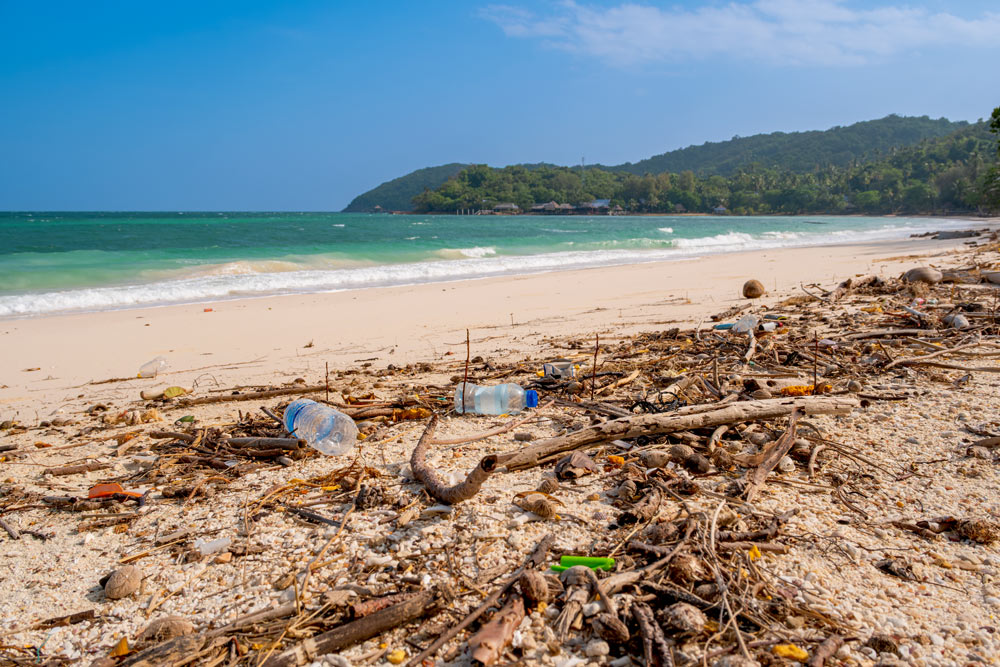
Oceans are exposed to the cumulative impacts and effects from a wide array of stressors (e.g. earthquakes, tsunamis, storms, sea warming and marine heat waves, blooms) forced by natural (climate change and disturbance regimes) and anthropogenic (human-driven climate change and global change) drivers that operate at multiple temporal and spatial scales, even different parts of the Earth (lithosphere, hydrosphere, atmosphere, cryosphere). The effects from these stressors accumulate over time from one or more sources in the natural and social environments, affecting individuals and communities in both positive (e.g. phytoplankton blooms at the base of the food webs, beach accretion from sea waves and littoral drift) and negative ways (e.g. jellyfish blooms, beach erosion from storms, decrease of seafood production), which are referred to as cumulative impacts. When impacts accumulate in a negative way we deal with hazards. In human communities, particularly those already overburdened, disproportionate impacts from hazards can arise from unequal environmental conditions and exposure to multiple stressors/hazards. Additionally, changes in climate can exacerbate many of these disproportionate impacts. To understand how multiple stressors jointly reshape our seas, we will build an integrated, multi-scale framework that brings together observation, modeling and synthesis. By working closely with other Hubs, we will embed biodiversity patterns, climate projections, pollution issues, and human uses of the sea into this framework, laying the groundwork for a marine global-change observatory built on integrated data, transparent and updatable methods, and sustained collaboration between scientists, managers and socio-economic actors.
RESEARCH PRIORITIES:
To characterise the nature, frequency and intensity of specific physical, chemical and biological stressors (including extreme events, thermohaline alterations and pollutants) across spatial and temporal scales.
To evaluate the co-occurrence in space (in three dimensions, both horizontally and throughout the water column) and time of these stressors, in order to identify hotspots of change exposed to multiple, often interacting pressures.
To assess the cumulative and synergistic effects of these stressors on marine and coastal ecosystems, including their resilience, tipping points and regime shifts.
To provide quantitative tools and operational products: monitoring networks, atlases, indicators, to inform conservation policies, coastal planning, risk management and climate adaptation.