The project enters its second phase by strengthening active restoration through new scientific tools, strategic partnerships, and a high-impact collaborative model.
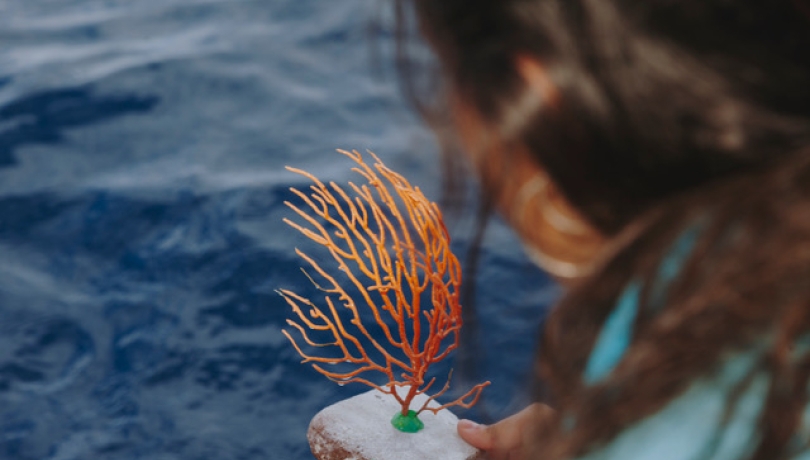
The CABALGA project, led by the Marine Sciences Institute of the Spanish National Research Council (ICM-CSIC) together with the AMICOS Association, is entering a new stage with the launch of CABALGA II. This second phase consolidates the work carried out so far and expands the initiative towards a more technological, broader, and long-term conservation-oriented model for vulnerable marine ecosystems.
During its first phase, CABALGA implemented pilot active restoration actions in protected marine areas focused on key structural habitats such as gorgonians, Posidonia oceanica seagrass meadows, and kelp forests. These interventions made it possible to reintroduce into the natural environment organisms accidentally caught by artisanal fishing and to reinforce populations in degraded areas, helping to restore the functionality of particularly sensitive ecosystems.
Among the most notable results are the reintroduction of more than 800 gorgonians, nearly 4,000 P. oceanica shoots, and around 1,700 kelp specimens. These actions have enhanced benthic biodiversity, increased ecosystem resilience, and improved habitats for numerous species of fishing interest.
More technology to scale impact
Building on this foundation, CABALGA II maintains its focus on vulnerable marine ecosystems and the active restoration of these habitats, while taking a further step in innovation through the incorporation of advanced technology for monitoring and optimizing protocols that ensure the long-term viability of restoration efforts.
In addition, the project will promote cryopreservation trials — the conservation of biological material at very low temperatures — involving gorgonian oocytes and sperm, with the aim of creating biological reserves that facilitate future reproduction and strengthen restoration strategies. This line of work places CABALGA II at the forefront of blue biotechnology applied to marine conservation.
This technical leap is accompanied by an expansion of the consortium. Joining the founding entities are the National Federation of Fishermen’s Guilds and the Institute for Research on Environment and Marine Science of the Catholic University of Valencia (IMEDMAR-UCV). This alliance will broaden the project’s geographical reach, generate new scientific and social synergies, and strengthen the involvement of the fishing sector in coastal conservation.
The success of CABALGA lies in its collaborative working model, which integrates scientific knowledge, the experience of the fishing sector, and social commitment, while also incorporating the active participation of people with intellectual disabilities as key agents in restoration activities. This approach not only provides effective environmental solutions, but also promotes inclusion and demonstrates that marine conservation is a shared responsibility.
This project is carried out with the collaboration of the Biodiversity Foundation of the Ministry for the Ecological Transition and the Demographic Challenge, through the Pleamar Programme, and is co-financed by the European Union through the EMFAF (European Maritime, Fisheries and Aquaculture Fund). This new phase represents a decisive step towards a more efficient, technological, and collaborative marine restoration model capable of addressing the challenges of global change.