With this alliance, ICM-CSIC becomes the leading marine reference centre within a global programme that brings together art and science.
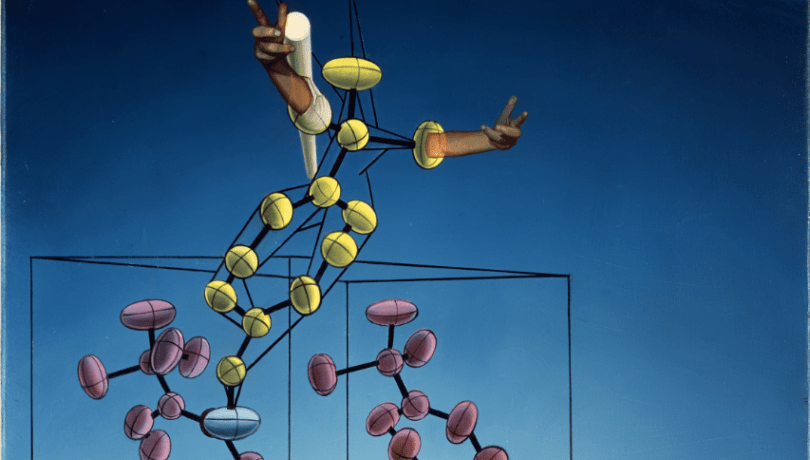
The Institut de Ciències del Mar (ICM-CSIC) has joined Platform Dalí, an ambitious international programme led by the Gala-Salvador Dalí Foundation. This strategic partnership aims to promote dialogue and creation at the intersection of science and art. The incorporation of ICM-CSIC is essential, as the centre will serve as the focal point for the programme’s marine research strand.
Platform Dalí, inspired by Salvador Dalí’s pioneering vision of the intertwining between art and scientific progress, seeks to extend the artist’s visionary legacy to imagine new ways of understanding the world. The programme is directed by Mónica Bello, an acclaimed cultural manager with an extensive international career, notably as the head of Arts at CERN.
Dialogue with the ocean
ICM-CSIC is one of five scientific centres of excellence in Barcelona selected to establish an active collaboration with Platform Dalí, alongside the Barcelona Supercomputing Centre (BSC-CNS), the Institute of Photonic Sciences (ICFO), the Institute for High Energy Physics (IFAE), and the Barcelona Biomedical Research Park (PRBB).
Starting in 2026, the programme will launch an annual calendar of activities, including artistic grants, residencies, meetings and public programmes. At the Institut de Ciències del Mar, these proposals will focus on exploring the unique dialogue between artistic practices and marine research.
The collaboration seeks to integrate artistic perspectives into laboratories and expeditions to generate new forms of knowledge and sensitivity toward the marine environment. The complexity of the ocean—from the effects of climate change to the exploration of its depths—requires not only scientific data, but also imaginative tools that help visualise and communicate these challenges to society. ICM scientists will be actively involved in welcoming and co-designing the artistic proposals, providing a stable framework in which art and science can come together to address the complexity of the world.
Valentí Sallarès, director of the Institut de Ciències del Mar (ICM-CSIC), underscores that this alliance is a decisive step for the centre’s mission:
"Our incorporation into Platform Dalí is a strategic decision that goes beyond simple outreach. The challenges facing the ocean are immense and cannot be solved with equations and sampling alone; we need a broader vision. Art, in this context, allows us to communicate the urgency of marine science to audiences that mere figures cannot reach."
Art as a tool for social transformation
The commitment to scientific culture and knowledge transfer is a cornerstone of ICM-CSIC’s strategy. In this regard, Elisabetta Broglio, Deputy Director for Scientific Culture at ICM-CSIC, highlights the transformative role of the initiative in engaging society:
"Scientific culture seeks to blur the boundaries between the laboratory and society, making knowledge a lever for social change. Platform Dalí gives us a privileged space to achieve this. The dialogue that will emerge in our facilities, where resident artists will work side by side with our researchers, will help us look at the familiar—our daily work—from a completely new perspective."
Broglio also emphasises that this is an excellent opportunity for the people of Barcelona to access marine research through innovative and emotional languages:
"We want citizens to feel the beauty and vulnerability of the ocean through art, so that they become active participants in the conversation about sustainability and marine conservation."
Grants and future exhibition in 2029
Platform Dalí has already announced the first group of grant holders and resident artists who will inaugurate the programme in 2026, whose works reflect the diversity of disciplines the Platform aims to foster. Among them are Mexican artist Tania Candiani; renowned Andalusian flamenco dancer and choreographer Israel Galván; the Catalan collective Taller Estampa, known for its critical approach to digital technologies; and South African artist and academic George Mahashe. Although their initial residencies focus on different areas of contemporary science (life sciences, fundamental physics, supercomputing and photonics), their work already sets a standard for the quality and diversity of approaches that will reach ICM-CSIC in the marine field.
ICM’s activity within Platform Dalí will culminate in 2029 with a major exhibition showcasing the full trajectory of the programme and its deep connection with Dalí’s scientific vision. This exhibition will not only display the works produced, but also illustrate how the dialogue between art and marine research has generated new perspectives on the major challenges facing the ocean. The programme aims to gradually expand its activities to other European cities and research centres, establishing itself as a global reference initiative.