The initiative, led by the ICM-CSIC, will focus on studying the Clarion-Clipperton Zone, a vast region of the abyssal Pacific located between Mexico and Hawaii of great scientific interest due to the potential future exploitation of polymetallic nodules.
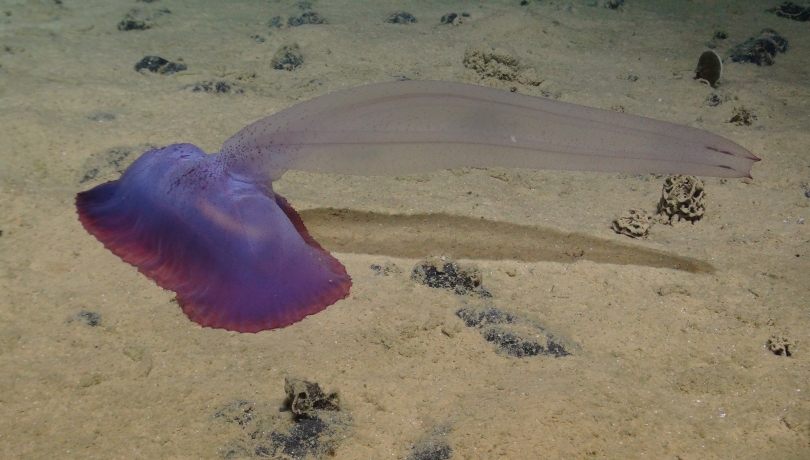
This January marks the launch of AbyScapes, an international pioneering project led by the Institute of Marine Sciences (ICM-CSIC). It will study, for the first time, how biodiversity is distributed across the vast stretches of the seabed occupied by abyssal landscapes, located between 3,000 and 6,000 meters deep. Despite covering more than 50% of the Earth's surface, these areas remain some of the most unexplored on the planet.
The project, selected through the highly competitive BNP Paribas Climate & Biodiversity international call—with over 160 proposals submitted and only about ten granted—has a budget of 800,000 euros and stands as one of the most ambitious research initiatives in this edition.
Study area
AbyScapes focuses on the Clarion-Clipperton Zone (CCZ), a vast region of the abyssal Pacific located between Mexico and Hawaii. It is of great scientific interest due to the potential future exploitation of polymetallic nodules, which are rich in minerals essential for the production of batteries, electronics, and the military and technological industries, among others.
Until now, the area has been very little explored, much like other abyssal plains on the planet, with very little comparable data. This makes it difficult to understand how many species inhabit it, how they are ecologically organized, and to what extent they may be vulnerable to human impacts and climate change.
“Abyssal plains were once viewed as extreme, life-poor environments, but we now know they are far from the ocean’s “great deserts” imagined when they were first studied in the last century” explains Erik Simon Lledó, a researcher at ICM-CSIC and project coordinator.
The researcher adds that "thanks to the rapid development of new technological tools applied to the study of these communities, we now know they harbor very high levels of biodiversity, but we still do not know which factors regulate their patterns across the large spatial scales that these systems encompass." AbyScapes will attempt to resolve these major questions and establish the foundation for understanding how this biodiversity will respond to the significant environmental impacts associated with climate change and mining in these remote ecosystems:
"With AbyScapes, we will have, for the first time, an integrated view of the environmental factors regulating abyssal biodiversity, its evolutionary history, and how the different coexisting benthic populations interact with each other – a knowledge that we still lack and that is essential for informing its future management," says Simon Lledó.
Indeed, the main objective of the project is to create the first integrated database with environmental, ecological, genetic, and functional information on the abyssal megafauna of the Northeast Pacific. This information will allow us to understand how physical, biogeochemical, ecological, and evolutionary processes interact to shape deep-sea communities, and what their capacity is to respond to warming, acidification, or other seabed alterations.
A pioneering scientific approach
The project stands out for its innovative methodological approach. It will use the latest generation of Earth System Models (CMIP6) to reconstruct the recent and future evolution of essential oceanographic parameters such as temperature, oxygen concentration, carbon flux, or carbonate compensation depth -a threshold that acts as a biogeographic boundary for many abyssal species and is shifting due to acidification. In parallel, three-dimensional hydrodynamic simulations will analyse how the larvae of deep-sea species disperse and whether the current network of protected areas in the Pacific can ensure the recolonization of areas potentially affected by mining.
Another pillar of AbyScapes is the analysis of tens of thousands of seabed images obtained by underwater robots, which will allow for the quantification of the abundance and biomass of key groups such as holothurians (sea cucumbers), essential for organic matter recycling. This information will be combined with high-resolution genomic data obtained through massive sequencing techniques, which will help delimit species, reconstruct their evolutionary history, and estimate genetic connectivity between populations in different parts of the CCZ.
Subsequently, and for the first time in a deep-sea ecosystem, all these data will be integrated to develop high-computation hierarchical ecological models that will allow for understanding the role of different processes in determining current biodiversity patterns. Thus, it will be possible to predict how megafauna will respond to future environmental scenarios, taking into account interactions between species and the environment, species and other species, functional traits, phylogenetic relationships, or dispersal processes.
The international dimension of the project
The international dimension of the project is key. AbyScapes is led by ICM-CSIC Barcelona and includes participation from the Barcelona Supercomputing Center (BSC) and other leading European centers such as Germany's GEOMAR and Senckenberg-SGN, the National Oceanography Centre (UK), the Biodiversity Centre Linz (Austria), and the University of Jyväskylä (Finland).
The first AbyScapes expedition will take place this February, setting sail from California for a month-and-a-half campaign in the CCZ, equipped with Remotely Operated Vehicles (ROVs) and state-of-the-art sampling technology.
"We are at a key moment to decide how we will manage the most extensive ecosystems on the planet," concludes Simon Lledó, convinced that AbyScapes will provide the necessary knowledge so that future policies align with conservation and a realistic understanding of the ecological limits of the ocean floor.