This month’s “In Depth” explores what we know about sharks and the current strategies available to protect them.
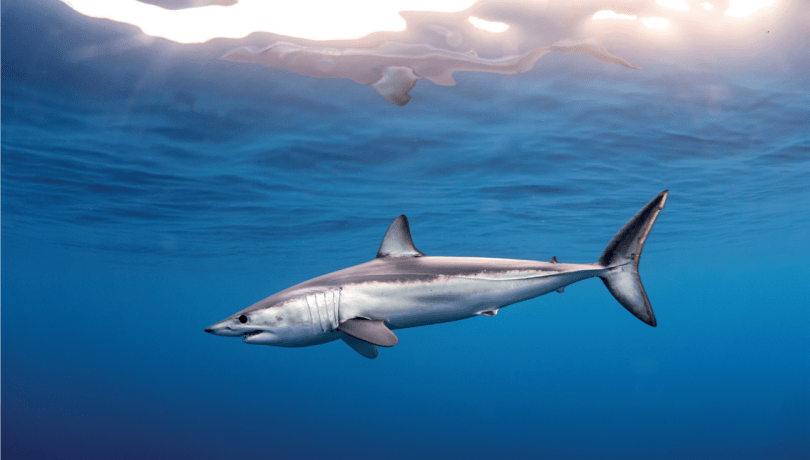
Fascination and fear surrounding sharks have coexisted in the public imagination for decades. However, science tells a different story: that of a group of animals essential to the balance of the oceans and, paradoxically, among the most threatened on the planet. With the recent release of the book “Tiburones”, published as part of the ¿Qué sabemos de? A collection by CSIC-Catarata and co-authored by Ana Colmenero Ginés from the Institute of Marine Sciences presents an opportunity to revisit what we truly know about these animals and why it is urgent to protect them.
The following report deepens this idea: understanding sharks is the first step toward conserving them.
Sharks: a key yet vulnerable group
Sharks constitute one of the oldest vertebrate lineages on Earth. They have survived five major mass extinctions, yet today face multiple threats—overfishing, habitat degradation, pollution, and climate change—that jeopardize their future.
In the Mediterranean, one of the most pressured regions in the world, many species are declining. Their biology helps explain their vulnerability: slow growth, late sexual maturity, and few offspring make population recovery extremely slow. This makes elasmobranchs one of the groups most sensitive to sustained human impacts.
In “Tiburones”, Colmenero debunks one of the most widespread misconceptions: that sharks are inherently dangerous. As the ICM-CSIC researcher notes, “most sharks are not dangerous to humans, although they are still wild animals and should be treated as such.” The book thus becomes a valuable outreach tool that brings marine biology closer to audiences of all ages and counters the sensationalism common in media and social networks during summer.
Her emphasis is on data: only a few species may pose a potential risk, and the probability of an incident is extremely low. Meanwhile, sharks play a crucial ecological role by regulating populations and maintaining healthy marine ecosystems.
Science to understand how they live… and what they need
Research carried out at ICM-CSIC on sharks advances essential knowledge for their conservation: distribution patterns, reproductive biology, behavior, sensory ecology, and responses to a changing ocean. This contributes to understanding how they find food, navigate, perceive threats, and move across key habitats.
This information is essential for defining priority protection areas, assessing population status, improving fisheries management, and anticipating climate change impacts.
The work conducted at ICM-CSIC feeds into international assessments coordinated by the International Union for Conservation of Nature (IUCN). Ana Colmenero’s role as coordinator of the National Shark, Ray and Chimaera Group helps translate science into concrete conservation tools such as Red Lists and Important Shark and Ray Areas (ISRAs).
This bridge between research and management is crucial because many shark species require urgent measures to ensure their survival.
Society as an ally: citizen science and marine education
The ¿Qué sabemos de? collection also emphasizes the need to transform society’s relationship with these animals. This perspective has inspired initiatives such as the Catsharks Association, founded by Ana Colmenero, Claudio Barría from the University of Oviedo, and David Nos from Ifremer, which integrates research, outreach, and citizen participation.
One particularly unique project involves incubating small-spotted catshark eggs in schools. Students care for embryos until hatching and then participate in releasing the young sharks into the sea. This direct experience profoundly reshapes social perception by making the fragility of these species and the importance of their habitats tangible.
This work is especially relevant as the Mediterranean faces major challenges. Its semi-enclosed nature, limited water exchange, and dense coastal population make it one of the regions where climate-related impacts manifest most rapidly and intensely. Recent years have seen unprecedented marine heatwaves, with surface temperatures exceeding 30 °C in some areas, drastically altering ecosystems and shifting the distribution of many species, including sharks.
Each summer, phenomena of tropicalization are recorded, with warm-water species expanding into the increasingly warm Mediterranean. Meanwhile, native species less tolerant of heat shift into deeper or cooler waters, disrupting ecosystem balance. Sharks—key predators and ecosystem regulators—are directly affected: they change their routes, reproductive cycles, and may migrate in search of suitable habitats.
In this context, the book “Tiburones” and the research carried out at ICM-CSIC provide a crucial framework for interpreting these changes and anticipating their consequences. Understanding how sharks respond to a transforming ocean enables the development of more resilient conservation strategies adapted to new environmental challenges.