The Barcelona-born researcher was key in the creation of the Juan Carlos I Spanish Antarctic Base and blazed a trail for generations of women in marine research.
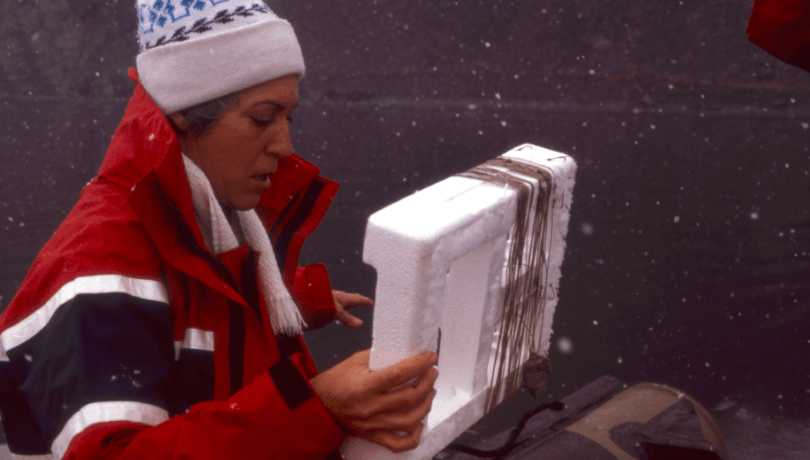
The Institute of Marine Sciences (ICM-CSIC) in Barcelona bids farewell to Josefina Castellví i Piulachs, affectionately known as "Pepita," who has passed away leaving an indelible legacy in the field of marine science. An oceanographer, microbiologist, and, above all, a relentless explorer, Castellví was not only one of the first women to research the White Continent but also became an ethical and scientific benchmark for the institution where she spent the majority of her career. Her passion for studying bacteria in extreme conditions and her commitment to scientific outreach marked a turning point in our understanding of women's roles in elite research.
Valentí Sallarès, Director of the ICM-CSIC, expressed his sadness at this loss, highlighting that Pepita was not just a brilliant researcher, but an institution in her own right. Sallarès stated that her courage in breaking glass ceilings at a time when science was dominated by men remains a constant inspiration. According to the Director, Castellví proved that quality research requires determination and a humanistic vision, which she managed to convey until the very end.
A Life Dedicated to the Ice and a Passion for Knowledge
Born in Barcelona in 1935, Josefina Castellví earned her degree in Biology from the University of Barcelona and her PhD in 1969. Although her early steps focused on marine microbiology, her destiny changed forever when she first set foot in Antarctica in late 1984. That expedition, shared with other pioneers such as Antoni Ballester and Marta Estrada, was the seed of what we now know as the Juan Carlos I Spanish Antarctic Base (BAE) on Livingston Island.
Marta Estrada, researcher emerita at the ICM and a companion in that historic feat, remembers those days with emotion and underscores Castellví’s work ethic under extremely harsh conditions.
"Pepita had overflowing energy and exceptional organizational skills," she says. In this regard, Estrada adds that her management as head of the BAE between 1989 and 1997 was "exemplary," making her the first woman to lead a scientific base in Antarctica.
For her part, Dolors Vaqué, also a researcher emerita at the ICM, explains that she had the privilege of sharing numerous scientific experiences and personal moments with Pepita during their stays at the BAE. She holds deep memories of her pioneering spirit, her generosity, and her steadfast dedication to science, which were a constant source of admiration and inspiration.
"Pepita was a teacher of life who taught us to observe the sea with respect and never to give up in the face of technical or political obstacles, always remaining a firm voice in the defense of public research," says Vaqué.
A Logistic and Human Legacy for the Science of the Future
Josefina Castellví’s impact went beyond test tubes; her influence on the structure of marine research in Spain was fundamental. Jordi Sorribas, director of the Marine Technology Unit (UTM-CSIC), acknowledges that without Castellví’s vision, today’s scientific logistics would be very different. Sorribas explains that Pepita understood perfectly that good science requires a solid infrastructure, and it was she who laid the foundations for coordination between researchers and technical staff. Thanks to her drive, the Spanish presence at the South Pole was professionalized, ensuring that subsequent generations had the necessary means to work in one of the most hostile environments on the planet.
"Pepita promoted the CSIC Antarctic base with a vision of sustainability and a service-oriented approach to science far ahead of her time... Her vision has been the seed that allows our polar community today to enjoy first-class technical services and facilities," Sorribas explains.
Today, the ICM-CSIC bids farewell to a woman who defined herself as being in love with the "most desolate place in the world," but her spirit will live on in every water sample analyzed and every expedition that sets sail for the South Pole. Josefina Castellví leaves us a legacy of rigor, a struggle for equality, and, above all, a fascination for nature in its purest state. As she used to say, "Antarctica never leaves you indifferent," and neither will the memory of one of this country's pioneers of oceanographic research.