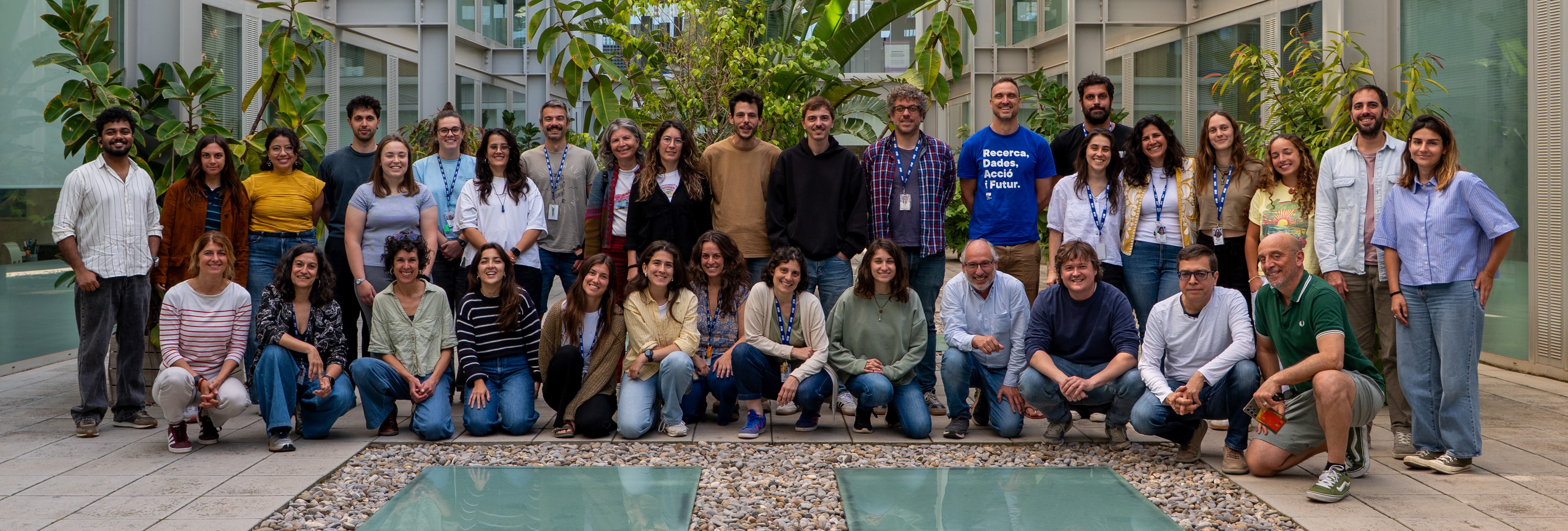
EMERGE is an integrated research group of the Institut de Ciències del Mar (CSIC) focused on the observation, restoration and governance of exploited marine ecosystems, with a particular emphasis on the Mediterranean region and deep-sea environments.
The mission of the group is to generate operational scientific knowledge and technological tools contributing to biodiversity conservation, sustainable fisheries management, ecological restoration and climate-adaptive marine governance. EMERGE works at the interface between ecological science, technological innovation and policy, contributing to the development of monitoring systems, ecological indicators and restoration approaches relevant to marine management.
The group addresses key challenges related to the ecological transition, the sustainable use of marine resources and climate-driven environmental change. Its activities combine fishery-independent ecological monitoring, Artificial Intelligence-supported marine observation, ecosystem-based and multispecies modelling, robotic observing systems, and the evaluation of restoration trajectories and spillover effects from fisheries no-take zones.
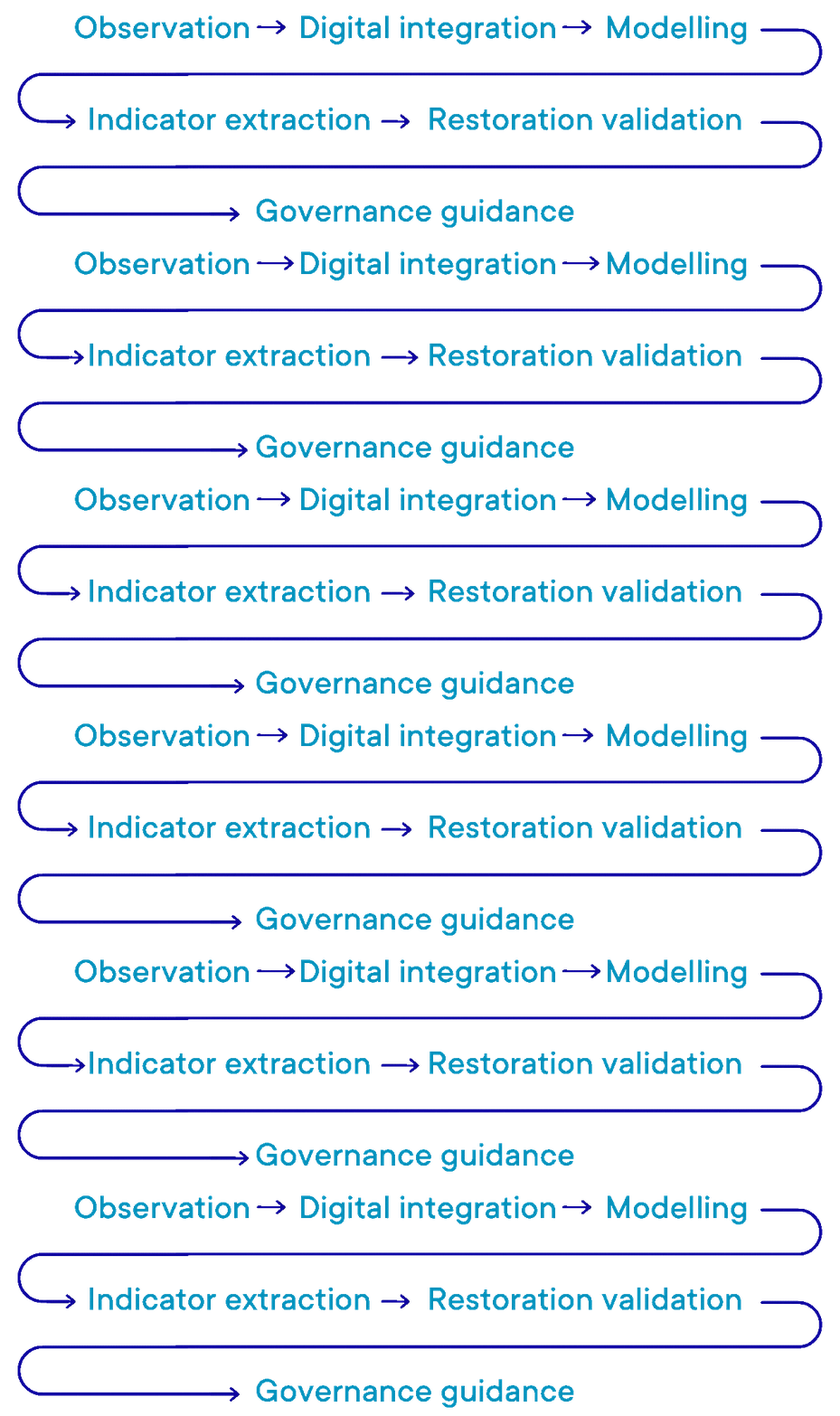
This integrated framework supports the development of ecological indicators and predictive tools relevant to ecosystem-based fisheries management, restoration monitoring and adaptive marine governance. Within EMERGE, these activities are structured as an end-to-end integration model:

The group research is engaged in operational monitoring and management contexts. Long-term ecological and fisheries datasets, digital imaging systems and multiparametric observing platforms are integrated through interoperable analytical workflows supporting habitat assessment, biodiversity monitoring and forecasting. This approach helps maintain the scientific robustness of technological developments while supporting their application in monitoring programmes, restoration initiatives and marine policy.
EMERGE activities are currently structured around several major European and national research initiatives, including DIGI4ECO (Horizon Europe Mission Ocean, 2024–2028), REDRESS (Horizon Europe, 2024–2028), LIFE ECOREST (EU LIFE Programme, 2021–2026), SMART-ME (Spanish National Plan, 2025–2028) and AbyScapes (BNP Paribas Climate and Biodiversity Initiative, 2026–2029), together with long-term fisheries monitoring and advisory activities conducted within ICATMAR (Institut Català de Recerca per a la Governança del Mar). These initiatives support the development of digital monitoring infrastructures, fisheries-independent and fisheries-dependent observation systems, restoration methodologies, and climate-resilient ecological assessment tools for marine ecosystems and sustainable fisheries management.
Organisational structure
The scientific activity of EMERGE is organised into five complementary and interconnected research sublines, each coordinated by senior members of the group (Table 1). The group comprises 49 members, distributed across these sublines according to their principal scientific dedication and mentoring responsibilities. These allocations are indicative only, as members collaborate actively across sublines within the integrated research framework of the group.
TABLE 1
Distribution of EMERGE members across research sublines, including coordinators and predoctoral researchers. Predoctoral researchers are included in the total number of members reported for each subline.
Research Subline | Coordination | Total Members | Predocs |
1. Governance and Ecosystem-Based Management | Joan B. Company / Marta Carretón | 20 | 6 |
2. Marine Technologies and Intelligent Observation | Jacopo Aguzzi / Nixon Bahamon | 12 | 4 |
3. Ecological Restoration and Resilience | Jordi Grinyó / Eve Galimany | 8 | 3 |
4. Behavioural, Morphological and Functional Ecology | Nathan J. Robinson | 5 | 2 |
5. Deep-Sea Ecology and Biogeography | Erik Simon | 4 | 2 |
| Total | 49 | 17 |
This distribution highlights a strong consolidation in the Governance and Marine Technologies sublines, which together constitute the operational backbone of the group interaction with fisheries advisory systems, digital infrastructures and ecosystem-based management frameworks.
The Ecological Restoration subline represents a well-established applied research axis with strong participation in Spanish and European restoration initiatives and industry-linked projects.
Behavioural, Morphological and Functional Ecology and Deep-Sea Ecology and Biogeography operate as specialised research cores, contributing mechanistic and large-scale ecological knowledge that feeds ecosystem modelling, conservation planning and climate-resilience assessments.
Key scientific contributions, advisory roles and societal engagement
The members of EMERGE contribute to international scientific advisory structures, governance platforms and applied marine management initiatives, among others the examples outlined below.
At the European level, Erik Simon and Nathan J. Robinson serve on the Science Advisory Board of DIGI4ECO (Horizon Europe Mission Ocean, 2024–2028), providing guidance on ecological monitoring methodologies, restoration indicators and digital-twin implementation for large-scale marine restoration programmes.
At the international institutional level, Nixon Bahamon and Jacopo Aguzzi are members of the Advisory Committee of the KIOST-ACS Center (Korea Institute of Ocean Science and Technology - Association of Caribbean States), supporting marine research cooperation and capacity building in the Caribbean region since 2024.
The group also plays a central role in regional marine governance through the Catalan Institute for Marine Governance (ICATMAR), a long-term fishery monitoring and advisory platform funded by the Generalitat de Catalunya and CSIC for the period 2024–2029 and coordinated at ICM-CSIC by Joan B. Company.
EMERGE maintains strong engagement with applied ecological restoration and industry collaboration. Jordi Grinyó coordinates the Mar de Gorgonias programme (2026–2029), a large-scale deep-sea habitat restoration contract with Red Eléctrica de España addressing ecological restoration linked to offshore energy infrastructure.
In addition, Erik Simon leads the BEAM-CI project (2026–2027), which provides baseline ecological assessments of abyssal megabenthic communities in the Exclusive Economic Zone of the Cook Islands.
The group also contributes scientific expertise to sustainable fisheries initiatives. Nixon Bahamon and Joan B. Company coordinates the scientific stock assessment analysis of the Palamós red shrimp fishery (Aristeus antennatus) within the Marine Stewardship Council certification framework, supporting the transition towards the first MSC-certified demersal fishery in the Mediterranean.
Through these activities, EMERGE connects ecological research, technological innovation and operational governance, strengthening the integration of marine monitoring, restoration science and ecosystem-based management. The group also contributes to ocean literacy by engaging a wide range of stakeholders, from public administrations to civil society, including inclusive science initiatives aimed at the deaf community.
Group composition
EMERGE maintains a balanced gender composition at group level (24 women, ≈49%; 25 men, ≈51%) (Table 2). Recruitment, supervision and leadership responsibilities follow principles of equality, transparency and merit-based progression, supporting long-term institutional stability and generational renewal.

Table 2. List of EMERGE members. The allocation of members to each subline is indicative only, as researchers collaborate across sublines within the group integrated research framework.