The aim of iMARES is to develop excellent evidence-based science of integrated marine socio-ecological systems with the final goal of informing environmental and conservation policies for a transformative management of the oceans, encompassing the pelagic, neritic, and coastal environments. We foster a systemic understanding of the patterns and processes driving marine ecosystem dynamics (encompassing past, present and future dynamics) under the influence of cumulative stressors, and their consequences for ecosystem functioning and nature-contributions to people, framed within socioecological perspectives. We use this knowledge to propose and evaluate management strategies that support ocean conservation and the blue economy, and foster the necessary transition towards an ecosystem-based marine spatial planning.
Within iMARES we study key species, which integrate changes across marine food webs and serve to monitor ongoing ecological shifts; keystone species that play a fundamental role in structuring and maintaining ecosystem functioning; and vulnerable species that are particularly threatened and at risk of decline. We study these species (both commercial and recreational) within their communities, food webs, and ecosystem contexts, and we assess their responses to environmental factors (e.g., climate-driven environmental changes, extreme events) and human activities (e.g., fishing, invasive species, pollution, pathogens). Our research approaches range from fieldwork expeditions, to laboratory work, data analyses and modelling. We develop and apply modelling methods using qualitative, statistical and mechanistic modelling approaches. We pioneer the use of trophic and molecular markers, emerging pollutants and pathogens, bio-logging, and remote sensing.
iMARES researchers are at the core of the new Scientific-Technical Service (STS) of ICM-CSIC: the Trophic Ecology and Connectivity (TEC), which focuses on the study of ecological interactions and functional connectivity in marine ecosystems. Its goal is to bridge the gap between understanding ecosystem structure and its functions by characterising trophic relationships and species and habitats connectivity and how these patterns vary across space and time. This approach enables the assessment of ecosystem vulnerability to climatic and anthropogenic disturbances, the quantification of key species' roles (including humans), and the prediction of future dynamics based on historical data. iMARES members are also actively involved in several multi-stakeholders’ participatory groups, helping to ensure that the best available science informs a wide range of decision-making processes.
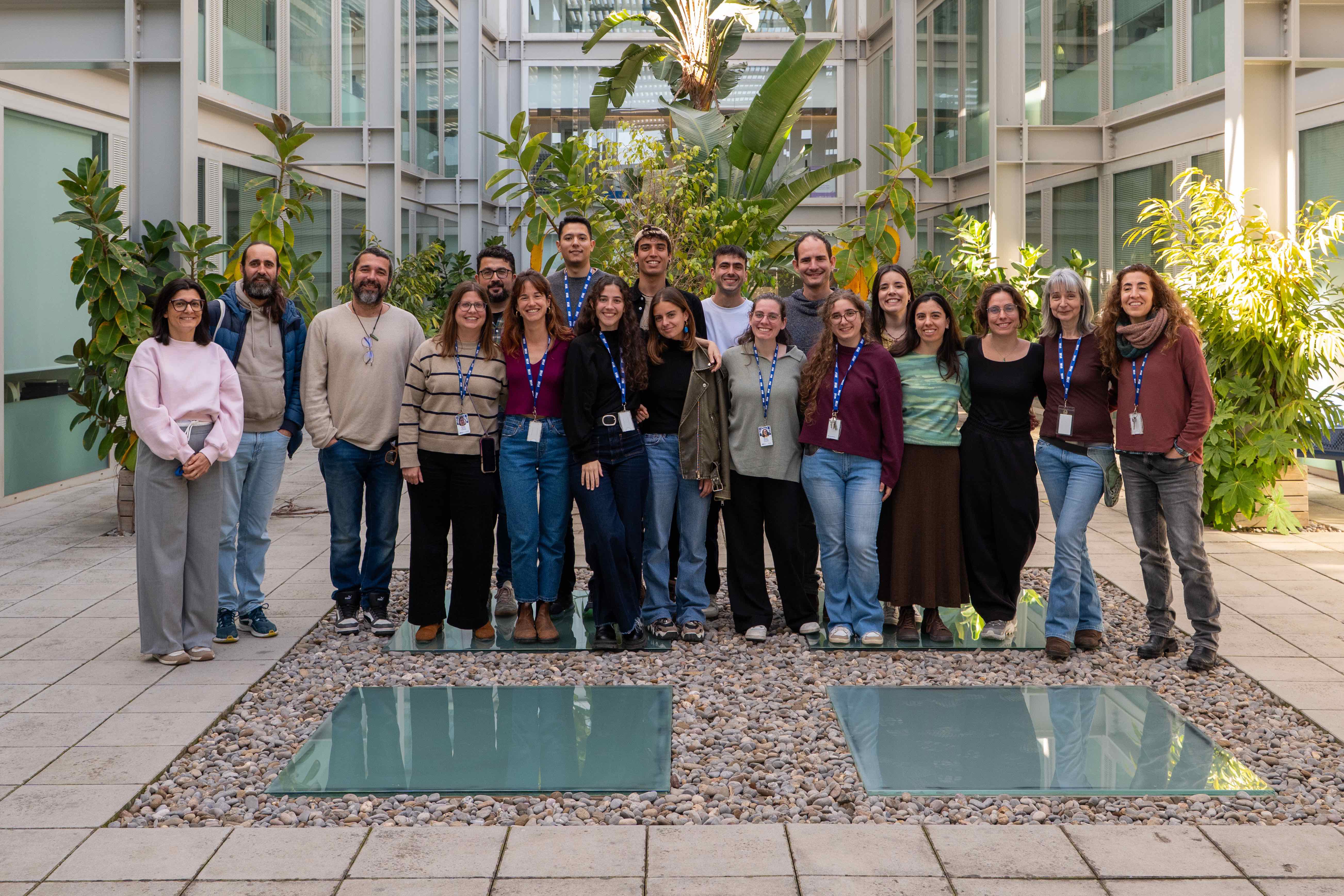
Since 2022, iMARES is a research group recognized by the Generalitat de Catalunya (AGAUR-SGR-Cat 2021). Every year, the group hosts several Master and undergraduate students, and welcomes numerous visiting national and international scientists. The group currently conducts several national and international basic science and applied projects.